Career Fair Swag That Works: How to Plan Giveaways for Every Recruiting Stage

The best career fair giveaway is not the one that disappears fastest from your table. It is the one matched to the moment: useful, inexpensive items at the fair itself, and progressively better gifts as a candidate moves from booth conversation to interview to offer letter. Most campus recruiting budgets get this backward.
Walk any fall career fair and you can see why. The median in-person fair now draws around 700 students and 109 employers, according to NACE benchmark data, and nearly every table is stacked with giveaways. When every table has a pile, the pile cannot be what makes yours memorable. Students walk toward engaged, approachable recruiters; the item in their hand afterward is what keeps your conversation from blurring into the other forty.
That does not make career fair swag pointless. It makes timing the strategy. This guide maps branded merchandise to each stage of the campus recruiting funnel, with real products, real per-item pricing, and a budget table for the whole season. One date to keep in view: fall fairs run from September through October, so merchandise orders need to land by early to mid-August.
Key Takeaways
- Giveaways do not win booth visits; your reps do. The item’s job is to mark the conversation and earn recall afterward, and students read its quality as a preview of how you operate.
- Match merchandise to the recruiting stage: items that cost a few dollars at the fair, mid-tier gifts at info sessions, premium pieces at interviews, offers, and intern day one.
- The measurable stakes sit downstream. Roughly 10 percent of accepted offers fall through, and intern conversion is the KPI campus teams answer for; the premium tiers exist to protect those moments.
- Fall fairs run in September and October. Place merchandise orders by early to mid-August.
Career Fair Handouts or Premium Gifts for Top Candidates? Both, at Different Stages
High-volume handouts and premium gifts are not competing choices; they belong to different stages of the same funnel. Handouts earn first conversations at the fair table: useful items that cost a few dollars, ordered in the hundreds. Premium gifts go to candidates who clear your screen: interview-day welcome bags, offer packages, and intern welcome kits, with $25 to $125 per person a rational spend. The planning mistake is treating the table as the whole program.
The funnel math explains the split. The average campus hire costs about $6,275 in recruiting spend, per NACE’s 2025 Recruiting Benchmarks. At the fair itself, that investment is still an abstraction: NACE’s student survey found that 45% of fair attendees go on to receive an interview invitation, and about 24% a job offer. The expensive risks sit later in the season. Recruiters commonly report that 7 to 10 percent of accepted offers renege before day one (a practitioner estimate, but one worth planning around), and intern-to-full-time conversion, 63.1% for the most recent cohort NACE measured, is the metric most campus teams answer for. A $40 tumbler means little to a stranger at a table. It means a great deal in the week a candidate is weighing two offers.
The reallocation also matches how students treat the fair haul. A booth conversation lasts two to five minutes, and the bag of branded items gets sorted that evening; in PPAI’s retention research, three-quarters of what people keep, they keep because it is useful. No giveaway stops traffic, and none compensates for a rep looking at their phone. People win the conversation. Products win the recall.
Here is the full allocation, which the rest of this guide walks through stage by stage:
What’s in This Guide:
- Career fair table: conversation props and a reason to remember you, not the main event
- Info sessions and campus events: mid-tier items for a smaller room that chose to show up
- Interview day: the first premium touch, sized to a short list of candidates
- Offer package: retail-quality apparel and drinkware that protect the yes
- Intern welcome kit: a composed day-one bundle that feeds conversion
- Ambassadors and multi-fair logistics: the program layer that keeps every campus stocked
A career fair season is one of the few times a student physically handles your employer brand. What they hold is what they believe about you.
Stage 1: Career Fair Giveaways (High Volume, Genuinely Useful)
Fair-table items serve everyone, so the bar is simple: genuinely useful, light enough to carry all day, and good enough to survive the evening sort. Our own catalog carries click pens for under a dollar, and we would steer a recruiting team away from them here; an item that gets tossed with the flyers spends money building the wrong impression.
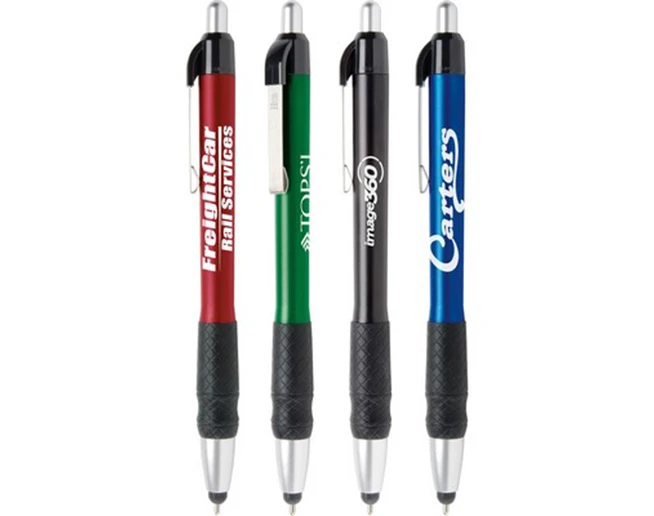
A metal-bodied pen with a textured grip and stylus tip. Students are blunt about pens in recruiting forums: flimsy ones get left behind, substantial ones get used at interviews.
Approximate cost: $1
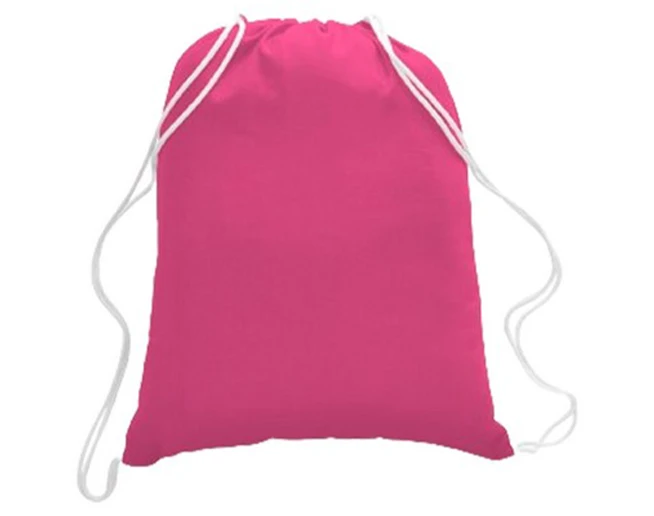
A simple and versatile drawstring backpack made from eco-friendly 100% cotton. This sport pack is a lightweight bag for carrying essentials for workouts and sporting activities, or as a handy grab-and-go bag.
Approximate cost: $3-5
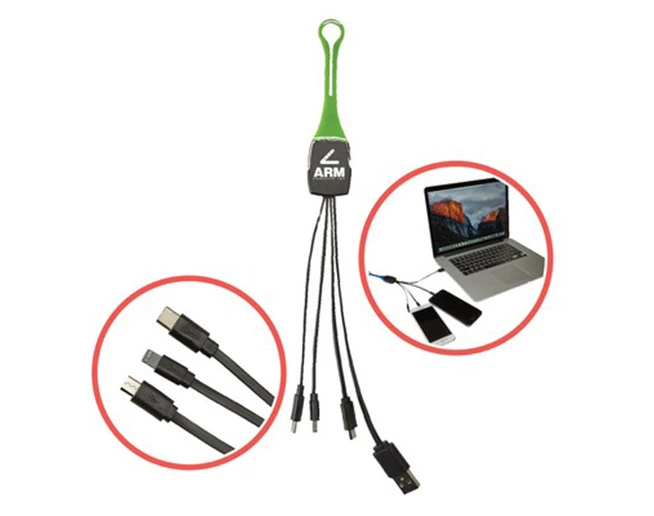
One cable covering USB-C, Lightning, and micro-USB. Multi-head charging cables are the tech item students consistently name as a keeper.
Approximate cost: $5
Under a dollar and a quarter at volume, and the logo rides on a laptop lid through every lecture.
Approximate cost: $1
The least expensive item on this list and the one with the most enthusiastic student following. Laptop and water-bottle real estate is currency on campus.
Approximate cost: Under $2
Two categories to skip at any price: lanyards and paper calendars, both of which Gen Z testers in ASI’s own research flagged as outdated.
Stage 2: Info Sessions and Campus Events (Mid-Tier, Self-Selected Audience)
An info session or a student-org dinner flips the economics of the fair table. The room is smaller, the headcount is known in advance, and everyone in it chose to spend an evening with your company. Spend accordingly: this is the $6-to-$16 tier, where the item should feel like a gift rather than a handout.
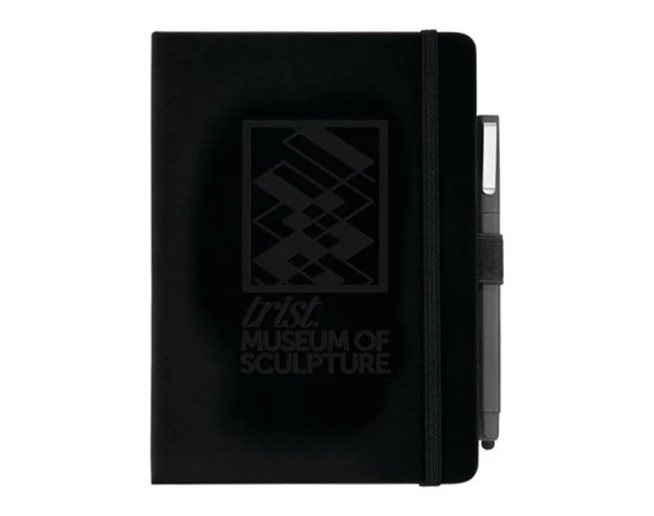
A hardcover journal with matching pen and FSC-certified paper. Students take real notes at info sessions; hand them something worth taking notes in.
Approximate cost: $8-11
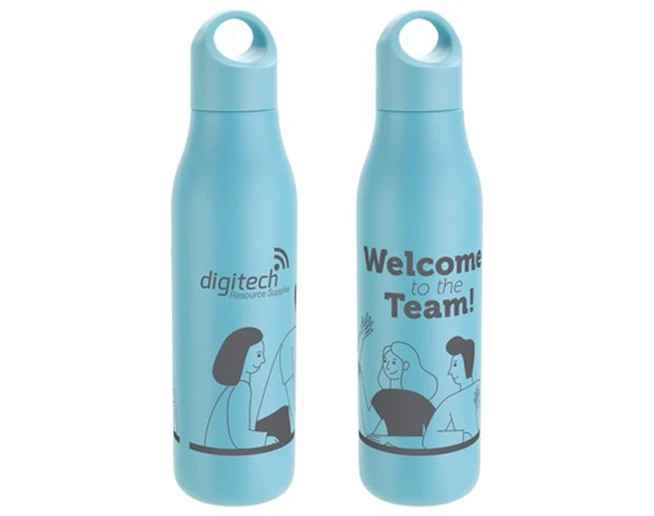
Vacuum-insulated stainless steel in seven matte colors. Drinkware is the second-largest promotional category by dollar volume for a reason: it earns daily use.
Approximate cost: $13-16
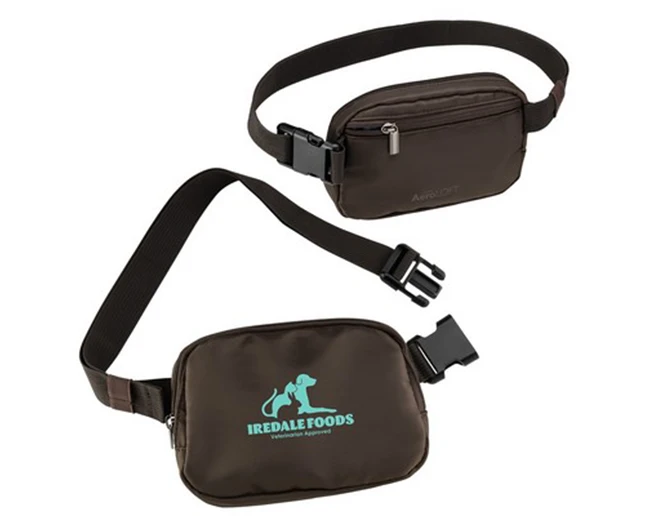
The crossbody silhouette that is everywhere on campus right now. If one item in this guide gets photographed on students unprompted, it is this one.
Approximate cost: $8-9
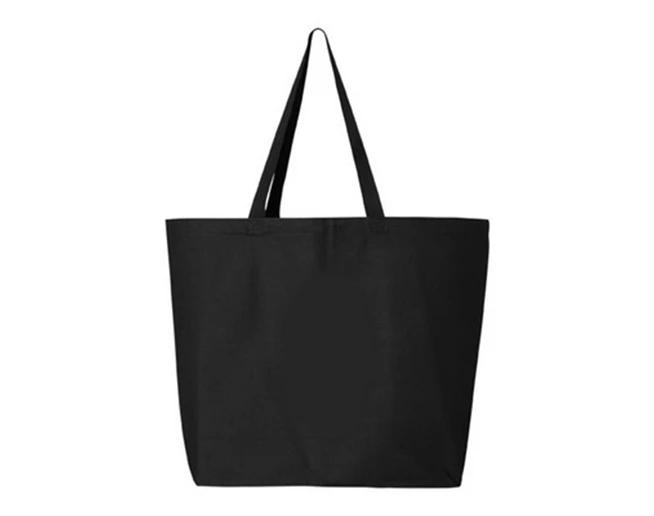
The canvas bag that carries everything else home. ASI’s impression research prices a tote at roughly a tenth of a cent per impression over its life.
Approximate cost: $6
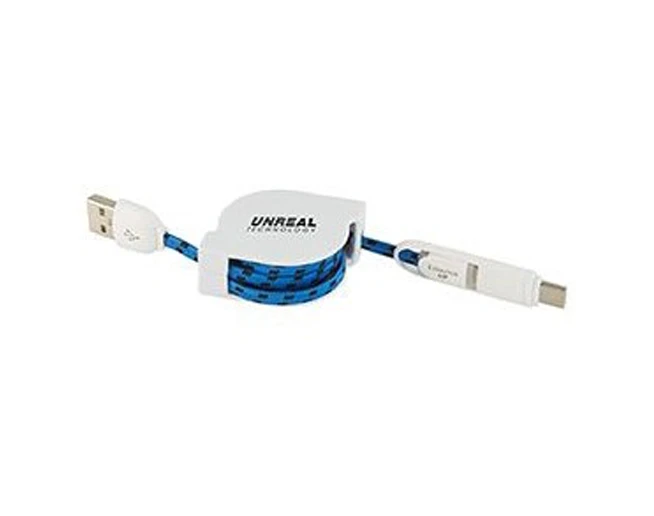
The braided, retractable step-up from the fair-table cable, right-sized for a smaller room.
Approximate cost: $6
A detail worth copying: keep product lines consistent across stages. The SENSO bottle here matches the SENSO tumbler in the intern kit, and the felt tag from the fair table matches the felt laptop sleeve at interviews. A program that repeats its materials reads as designed rather than assembled from leftovers.
Stage 3: Interview Day (Targeted)
By interview day, the audience is a short list: a few dozen candidates who cleared your screen. This is where a welcome bag earns its place. Thirty dollars of branded merchandise per candidate is a rounding error next to what an interview day costs to run, and it is the first physical evidence of how the company treats people it is serious about. If your first rounds happen over video, hold the bag for the in-person final round, or ship it ahead of a virtual superday; it does the same job at a distance.
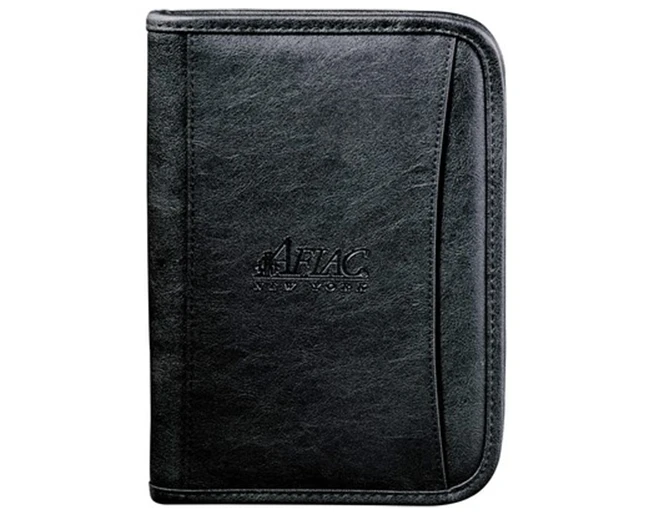
The interview staple, zippered with FSC-certified paper. Many candidates will carry it into their next interview, too, which is the point.
Approximate cost: $17-22
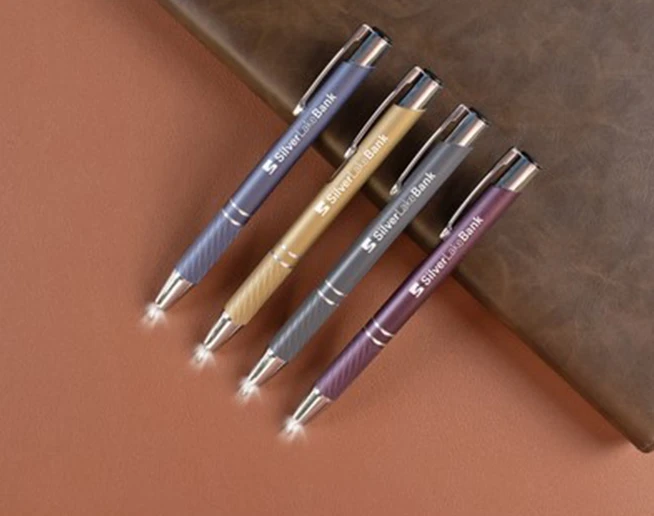
A weighted metal pen that slots into the padfolio loop. Together, they make the bag feel composed instead of collected.
Approximate cost: $4
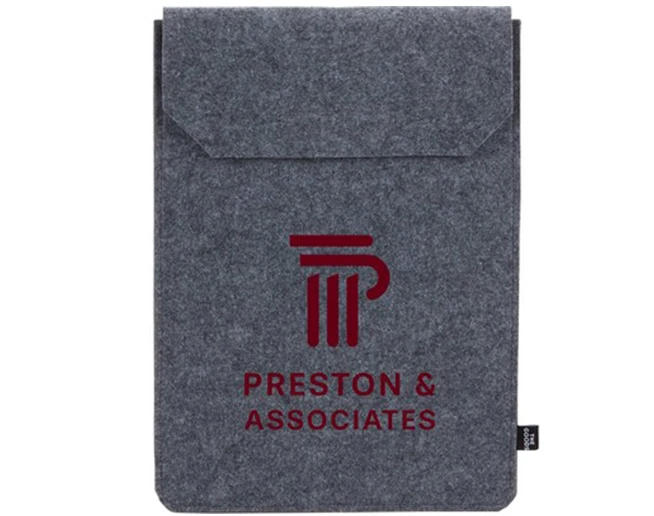
A laptop sleeve in the same recycled-felt line as the fair-table luggage tag. The candidate who kept your bag tag now owns a matching set, and that reads as intent.
Approximate cost: $7-9
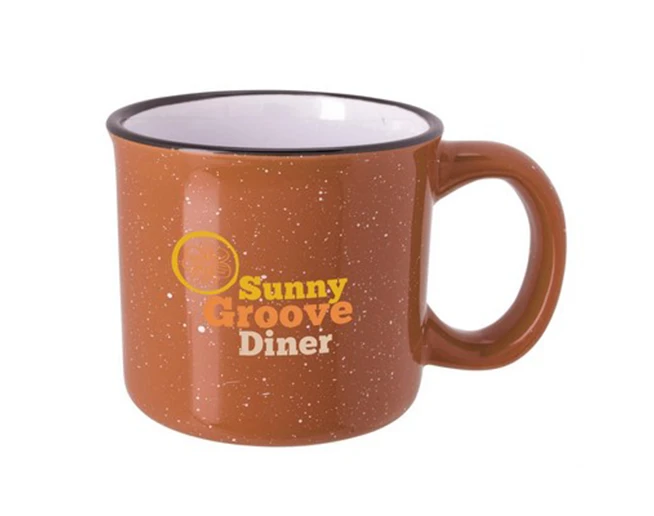
A retro speckled ceramic mug for the coffee-chat moment. It goes home and lives on a desk.
Approximate cost: $5-7
Stage 4: The Offer Package (Premium, the Renege Window)
An accepted offer is not a closed deal. The 10% renege problem from earlier lives in the months between the signature and day one, while the candidate’s other options keep calling. Be honest about what a gift can do here: it will not outweigh a better offer. What it does is keep you present, worn to class and sitting on a desk, through the weeks when the decision could still move. For roughly $80 in retail-quality items, presence is cheap.
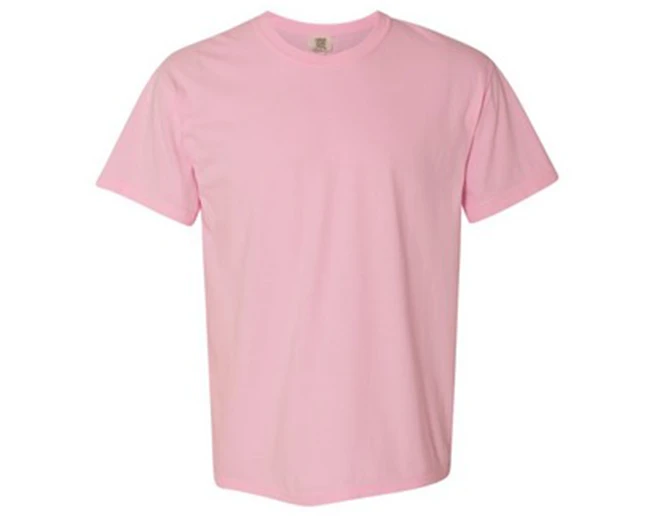
This is also the tier where brand names matter. In PPAI’s Gen Z research, apparel is the promotional category Gen Z likes most (63%), while office items sit at the bottom of their list at 27% in PPAI’s generational preferences data. The label on the hoodie is part of the message.
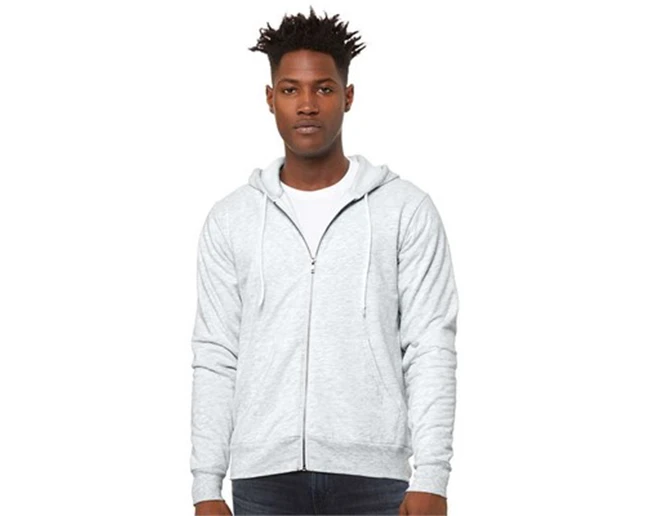
The offer-stage hoodie in a retail blank that students already own in other colors. It gets worn to class, which is the entire employer-branding job.
Approximate cost: $37
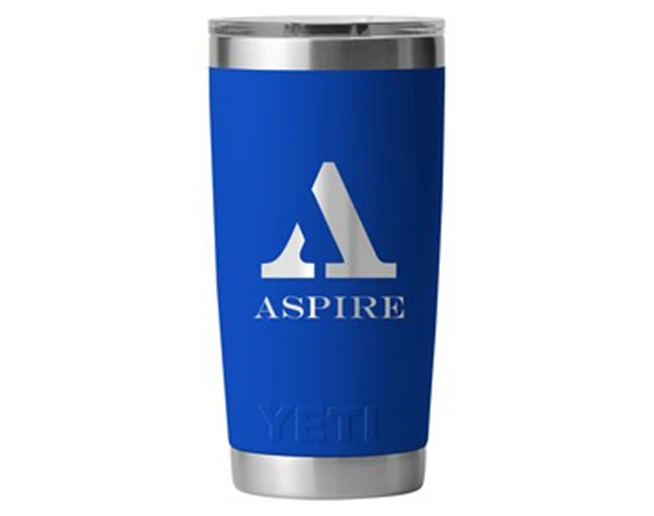
An authentic Rambler with your mark next to the YETI badge. Nobody leaves it in a cabinet.
Approximate cost: $41-45
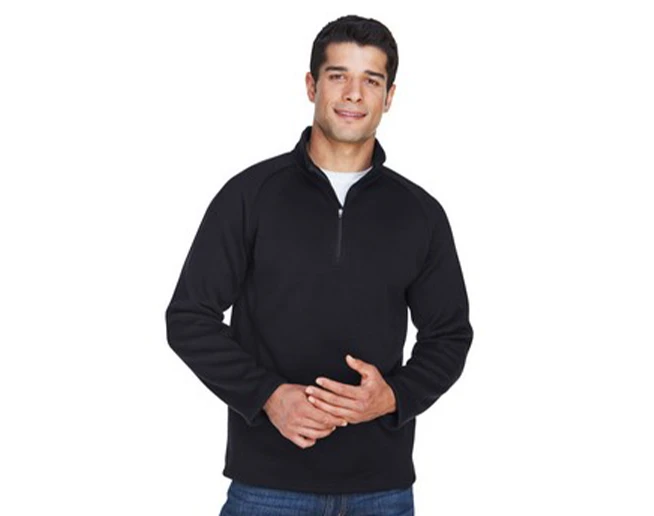
The business-casual option for finance and consulting offers. It reads first-week-at-work rather than freebie.
Approximate cost: $54
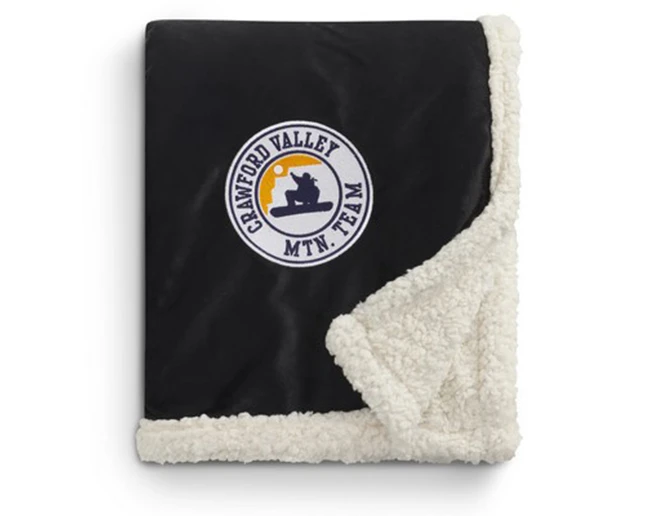
Arrives gift-banded and packaged, which makes it the easiest item on this list to drop into an offer box.
Approximate cost: $35-44
One operational note: Collect apparel sizes in the offer-acceptance paperwork, not in a follow-up email. It reads as a standard process, keeps the gift a surprise, and makes the kitting clean.
Stage 5: Intern Welcome Kits (Day One)
The intern welcome kit is the first day of work made tangible, shipped to a home address or waiting on a desk. The classic composition is remarkably consistent across companies: drinkware, a bag, a hoodie, and something for the desk. The stakes are the numbers your program is graded on. NACE reports intern offer acceptance at 88.3% and intern-to-full-time conversion at 63.1% for the most recent cohort; a kit does not create those numbers on its own, but it is the first thing a new intern photographs.
Assembling, warehousing, and shipping kits to dozens of addresses against the same start date is its own logistics job. That is exactly what a new-hire welcome kit program with built-in kitting and fulfillment is for.
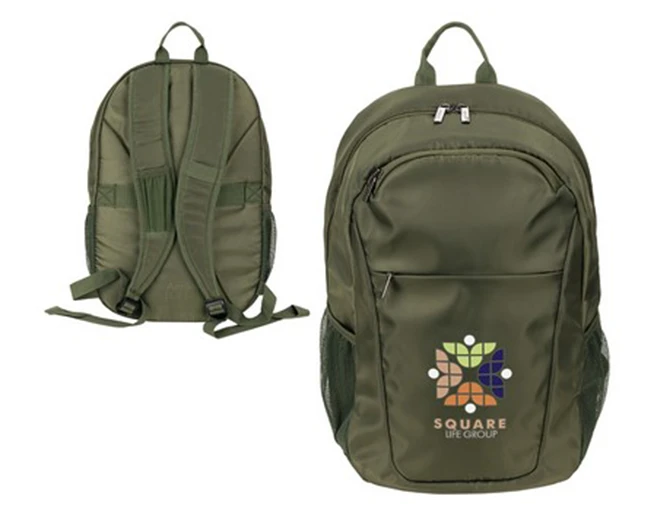
The kit carrier, clean enough for a commute, in black, navy, or olive.
Approximate cost: $25-30
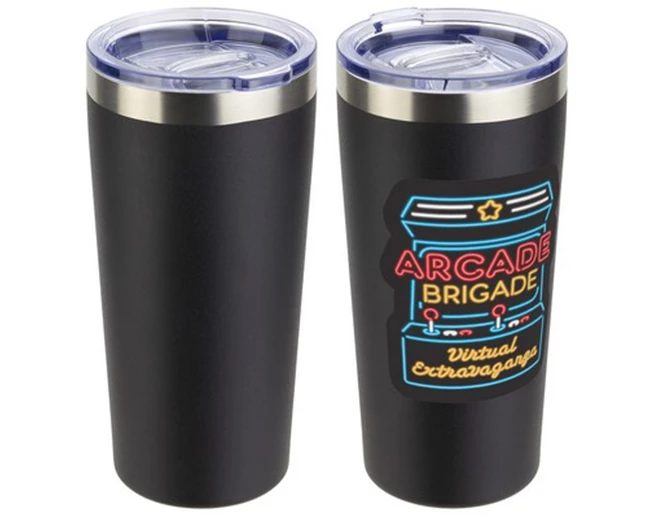
The drinkware staple, in the same line as the info-session bottle.
Approximate cost: $13-16
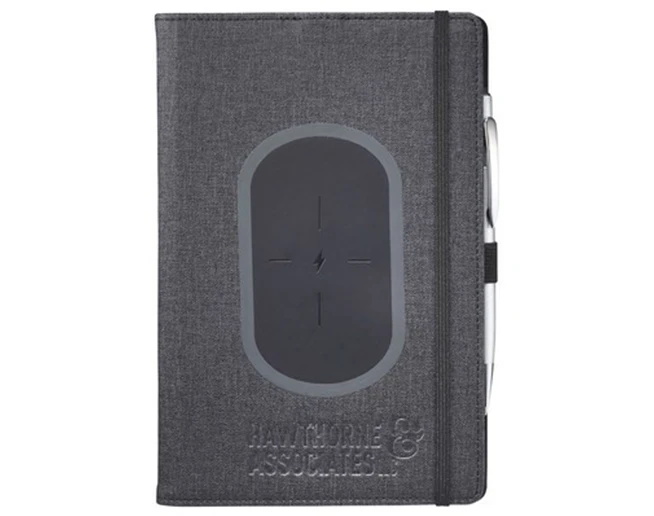
A hardcover journal with a charging pad built into the cover. The desk setup in one object.
Approximate cost: $22-27
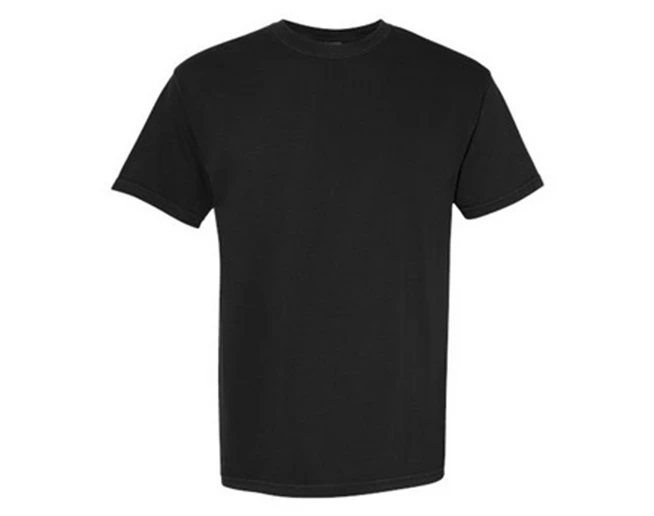
The cohort shirt in the brand that college students actually wear. T-shirts are the most desired promotional product in ASI’s 2026 global study, named by 55% of U.S. consumers.
Approximate cost: $13
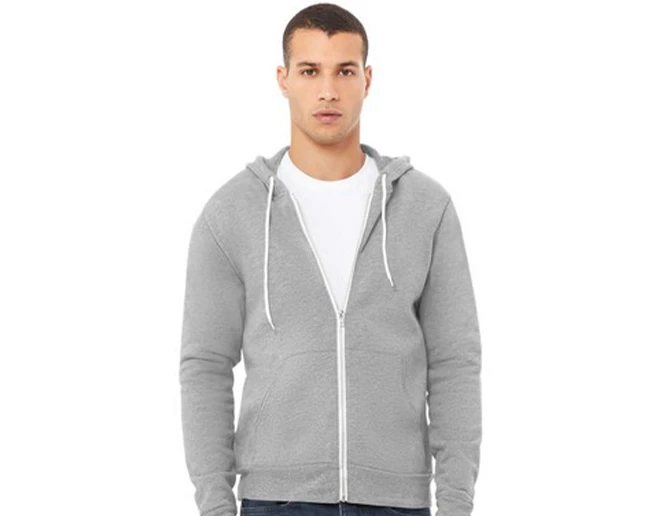
The Bella+Canvas hoodie from the offer package. A full kit lands between $73 and $123 per intern depending on composition.
Approximate cost: $37
Stage 6: Campus Ambassadors and Multi-Fair Seasons
Campus ambassadors carry your brand between events, all year. Their kit has two halves: a wearable identity and stock to give away. About $35 to $40 outfits an ambassador, and the giveaway stock is the same sticker and small-item inventory the fair table uses.
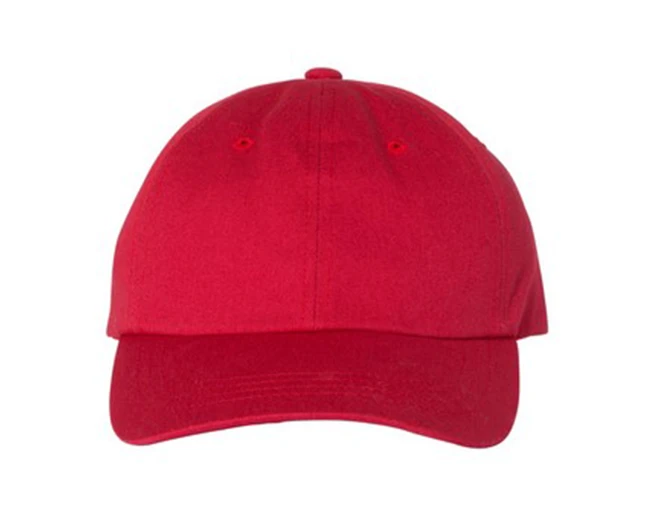
The unstructured cap from the maker behind most retail streetwear caps. Ambassadors will wear it off-shift, which is the test.
Approximate cost: $13
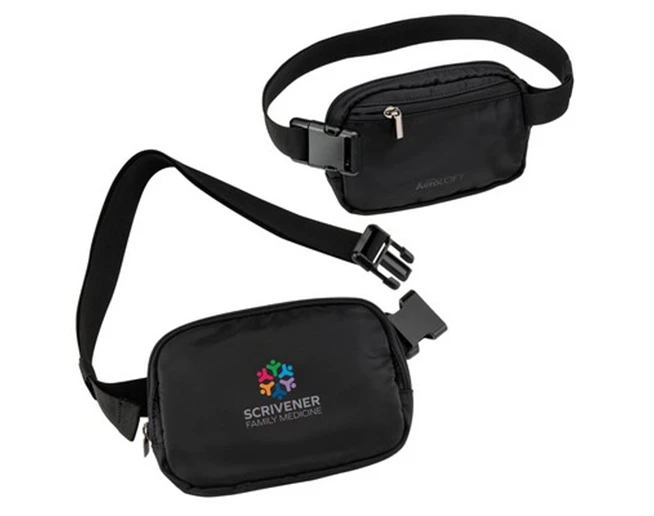
From the info-session tier. Worn at every tabling event.
Approximate cost: $8-9
From the fair table. The distribution stock ambassadors actually hand out.
Approximate cost: Under $2
Ambassadors are also where a university’s recruiting season logistics get real. The average employer’s core-school list has shrunk from 39 campuses in 2020 to about 25 in 2024, according to Veris Insights’ campus recruiting research, and even 25 campuses means dozens of shipments, restocks, and one-off requests across a semester. An online company store turns that from spreadsheet-and-email work into recruiting coordinators ordering from a pre-approved catalog, with built-in budgets and brand standards.
What Is a Realistic Swag Budget Per Item at Each Stage?
Plan in three bands rather than one number: a few dollars for items anyone can take, $6 to $16 once the audience chooses to show up, and $25 to $125 per person once a name is on a shortlist, an offer letter, or a start-date roster. A fair table stocked for a quarter to a third of expected attendance typically lands between $500 and $1,000; the premium tiers are the reverse, small counts at real prices, and they are the spend that tracks to outcomes.
Two planning notes before the table. Prices here are catalog ranges at typical quantity breaks, so decoration method and order volume will move them; treat them as planning numbers, not quotes. And minimums vary by item; premium pieces generally work in small runs, but confirm before promising an offer class their hoodies. Every price in this guide comes from the products linked above and was checked against the live catalog in July 2026.
| Stage | Who gets it | Real per-item range | Shape of the spend |
|---|---|---|---|
| Career fair table | hundreds of strangers | up to $5 | useful conversation props, not the main event |
| Info sessions / events | 30-100 self-selected | $6-16 | mid-tier, smaller room = more per head |
| Interview day | 10-40 screened candidates | $4-22 (~$25-35 per welcome bag) | padfolio + pen composition |
| Offer package | signed offers | $35-54 per item (~$80 for two) | retail brands only; protects the yes |
| Intern welcome kit | day-one interns | $73-123 per kit | composed bundle, kitted and shipped |
| Ambassador kit | 2-5 per campus | ~$35-40 + distribution stock | wearable identity + stickers to hand out |
The Campus Recruiting Calendar: When to Order What
Campus recruiting runs on the academic calendar, and the academic calendar does not wait for a purchase order. Employer registration for fall fairs opens in early summer at most universities (MIT opens registration in early July, and many schools close it weeks before the event). Fairs cluster in September and October, first-round interviews follow in October and November, and the first wave of offers typically lands before Thanksgiving. The spring season repeats the cycle at a smaller scale from February through April, and intern welcome kits ship for May and June start dates.
Decorated merchandise needs lead time: plan on two to four weeks from artwork approval for most items, longer for retail brands and anything kitted. Work backward from the season:
| Merch moment | In use | Order by |
|---|---|---|
| Fair-table giveaways | September-October fairs | early August |
| Info session and event items | September-October | early August (combine the order) |
| Interview-day welcome bags | October-November | mid September |
| Offer packages | November-December | mid October |
| Spring-season restock | February-April fairs | early January |
| Intern welcome kits | May-June start dates | April |
| Ambassador kits | semester kickoff | early August |
One practical note: a recruiting season is one program ordered in waves, not seven unrelated purchases. Running it through a single provider means one round of artwork approvals and brand checks covers the entire calendar.
Conclusion
The pattern across all six stages fits in one sentence: budget follows the funnel. Spend a little on many people early, spend real money on a few people late, and judge every item by the same test: will it still matter to the person holding it a week later? At the fair table, that means useful. At the offer stage, it means retail-quality. At intern day one, it means a kit that looks like someone thought about it, because someone did.
Moxie builds these programs end-to-end: product sourcing, in-house design, decoration, kitting, warehousing, and shipping timed to the recruiting calendar. If your fall season is taking shape, our custom swag team can turn this guide’s stage-by-stage structure into a priced program for your campuses.